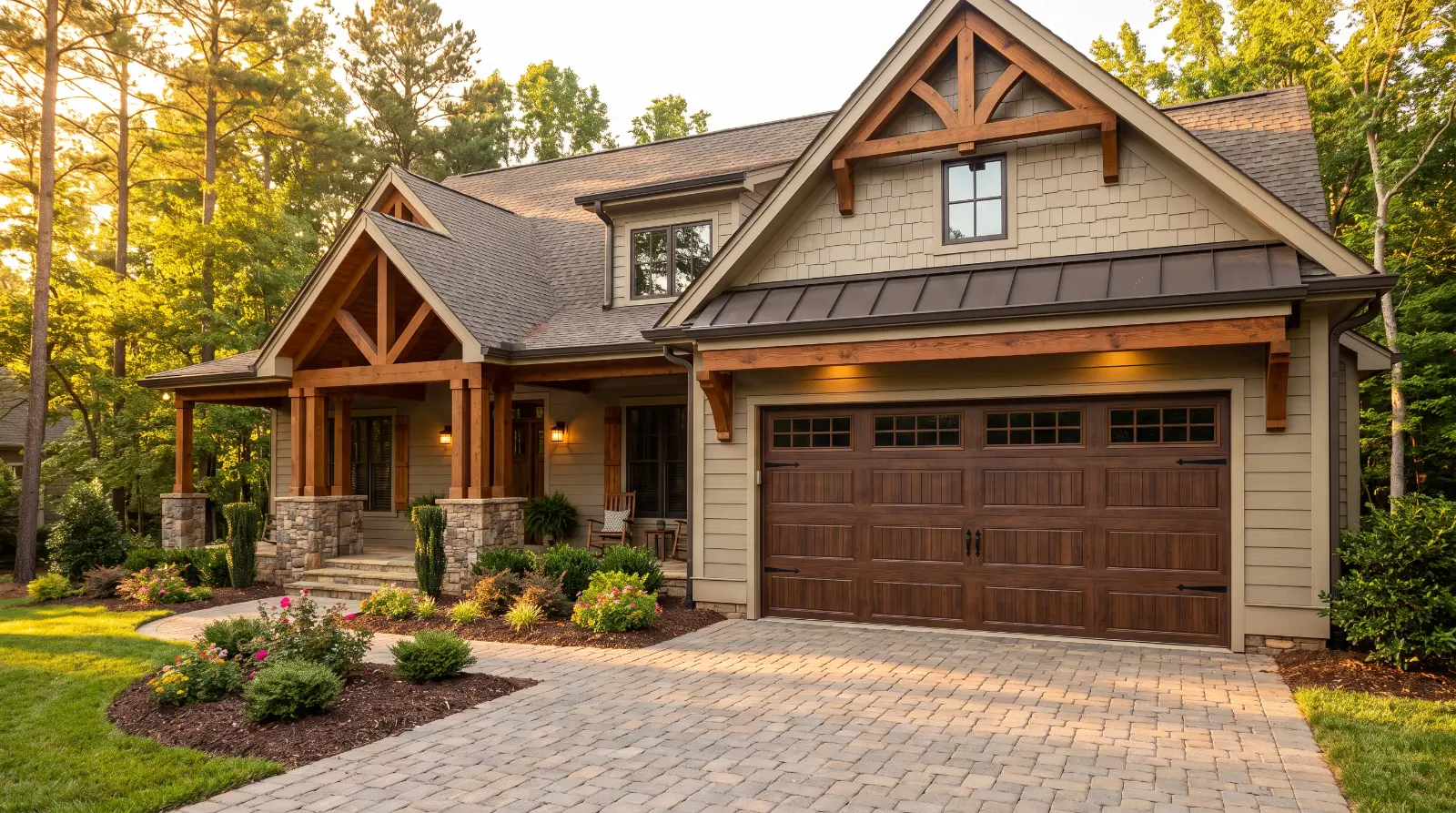
Sometimes repairing an old door stops making sense. Panels are cracked or rotted, the door is uninsulated and lets the cold pour in, or you've paid for three repairs in two years. A new door also changes how the front of your house looks, and a tired, dented door is one of the first things buyers notice when a house goes on the market.
Repair or replace?
Replacing is usually the better call when:
- Several panels are damaged, rotted or rusted through.
- It's an old wood door that's warped, heavy and hard to balance.
- The door is uninsulated and the garage is attached or sits under living space.
- Replacement parts for your door model are no longer made.
- You're putting the house on the market and the door looks tired.
Choosing a door for a Connecticut winter
Insulation. Doors come uninsulated, with polystyrene panels, or with injected polyurethane foam. Polyurethane doors are the warmest and strongest. Look at the R-value, but also at the weatherstripping between sections and along the bottom, since that's where cold air actually gets in.
Material. Insulated steel is the most common choice around Waterbury because it holds up to snow, salt and temperature swings with very little upkeep. Wood looks great on older colonials and Victorians, but it needs regular painting or staining. Wood-look composite and steel with a woodgrain finish split the difference.
Style. Raised-panel doors suit most capes, ranches and split levels. Carriage-style doors work well on older homes and colonials, which are common in Waterbury's older neighborhoods and in towns like Woodbury and Middlebury. Windows in the top section add light, but choose insulated glass.
Bottom seal and threshold. If your garage floor is uneven or slopes, which is common on hilly lots, ask about a thicker bottom seal or a floor threshold so the door seals properly when closed.
Low ceilings, odd sizes and older garages
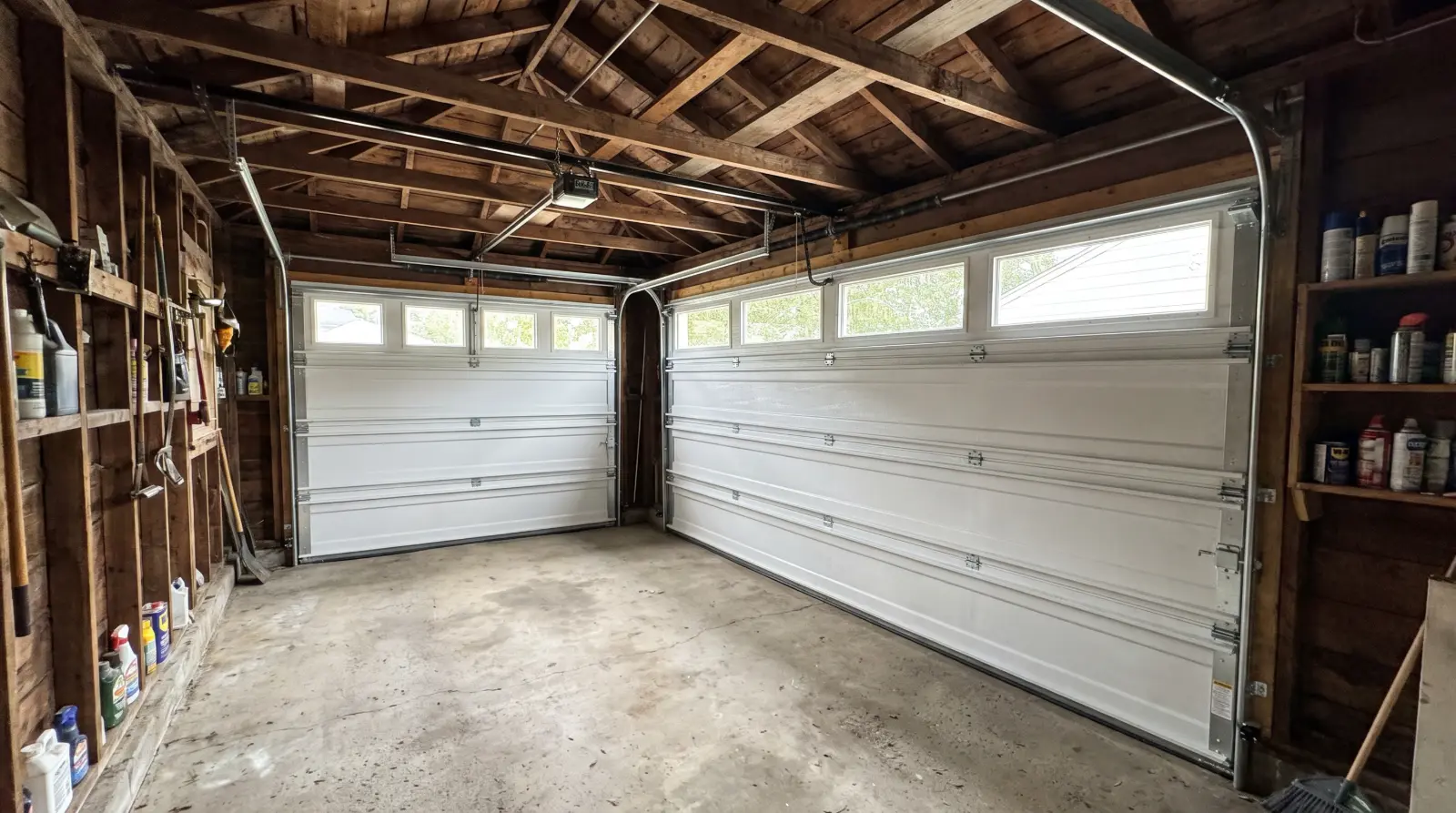
A lot of Waterbury's garages were built long before today's standard sizes. Detached garages behind older two- and three-family houses often have narrow openings, low ceilings, uneven floors or framing that has settled over the decades. None of that rules out a new door, but it changes what gets installed.
- Low headroom. A standard sectional door needs roughly 12 inches or more of clear space above the opening. If you have less, a low-headroom track kit or a rear-mounted spring setup can make it work.
- High-lift and vertical-lift tracks. If the ceiling is tall and you want room for storage or a car lift, the track can run higher up the wall so the door sits out of the way.
- Odd-size openings. Doors come in standard widths and heights. An opening that's a few inches off may need framing work or a custom-size door.
- Uneven floors. On sloped slabs, a thicker bottom seal or a threshold strip helps the door seal.
A good installer will measure the opening, headroom, side room and back room before ordering anything. If nobody mentions headroom on an older garage, ask.
What a full installation usually covers
A complete installation normally means removing and hauling away the old door, new tracks, springs sized to the new door's weight, rollers, hinges and weatherstripping, plus balancing the door and testing the opener's safety reverse. Whether a new opener, disposal of the old door, and trim or framing work are part of the job varies by company, so ask.
How long it takes
Swapping a standard single or double door usually takes most of a day once the door is on site. Stock sizes in common colors are often available fairly quickly, while custom sizes, special colors, windows and carriage-style hardware are usually ordered ahead. In older garages, any framing or header repair has to happen before the new door goes in.
Ask the installer
- Did you measure the headroom, side room and back room, not just the opening?
- Which insulation is in this door, polystyrene or polyurethane, and what's its R-value?
- Are the springs sized for this door's weight, and are they standard or high-cycle?
- What bottom seal or threshold do you suggest for my floor if it slopes?
- Will my current opener handle the new door, or does it need replacing?
- Do you remove and dispose of the old door?
- What warranty comes with the door, the springs and the installation?
Common questions
How long does it take to install a new garage door?
A standard single or double door usually takes most of a day, including removing the old door, installing tracks and springs, and balancing and testing. Odd sizes, low headroom or framing repairs can add time, and custom doors are usually ordered ahead.
Is an insulated garage door worth it in Waterbury?
Usually, yes, if the garage is attached or has living space above it. Insulated doors keep the garage warmer in winter, protect the opener and car from the worst cold, and are quieter and stiffer than single-layer doors.
Should I replace the opener at the same time?
If the opener is more than about 10 years old, it often makes sense. The installer is already there, and a heavier insulated door may need a stronger opener.
What size garage door do I need?
Many older single-car garages in Waterbury have 8 by 7 foot or 9 by 7 foot openings. Two-car garages commonly have one 16 by 7 foot door or two single doors. Odd sizes are common in older detached garages, so a pro should measure before you order.
Can I get a new garage door if my garage ceiling is low?
Usually, yes. Low-headroom track kits and rear-mounted springs let a sectional door fit under a ceiling with less clearance than normal. An installer needs to measure the space above the opening before ordering.