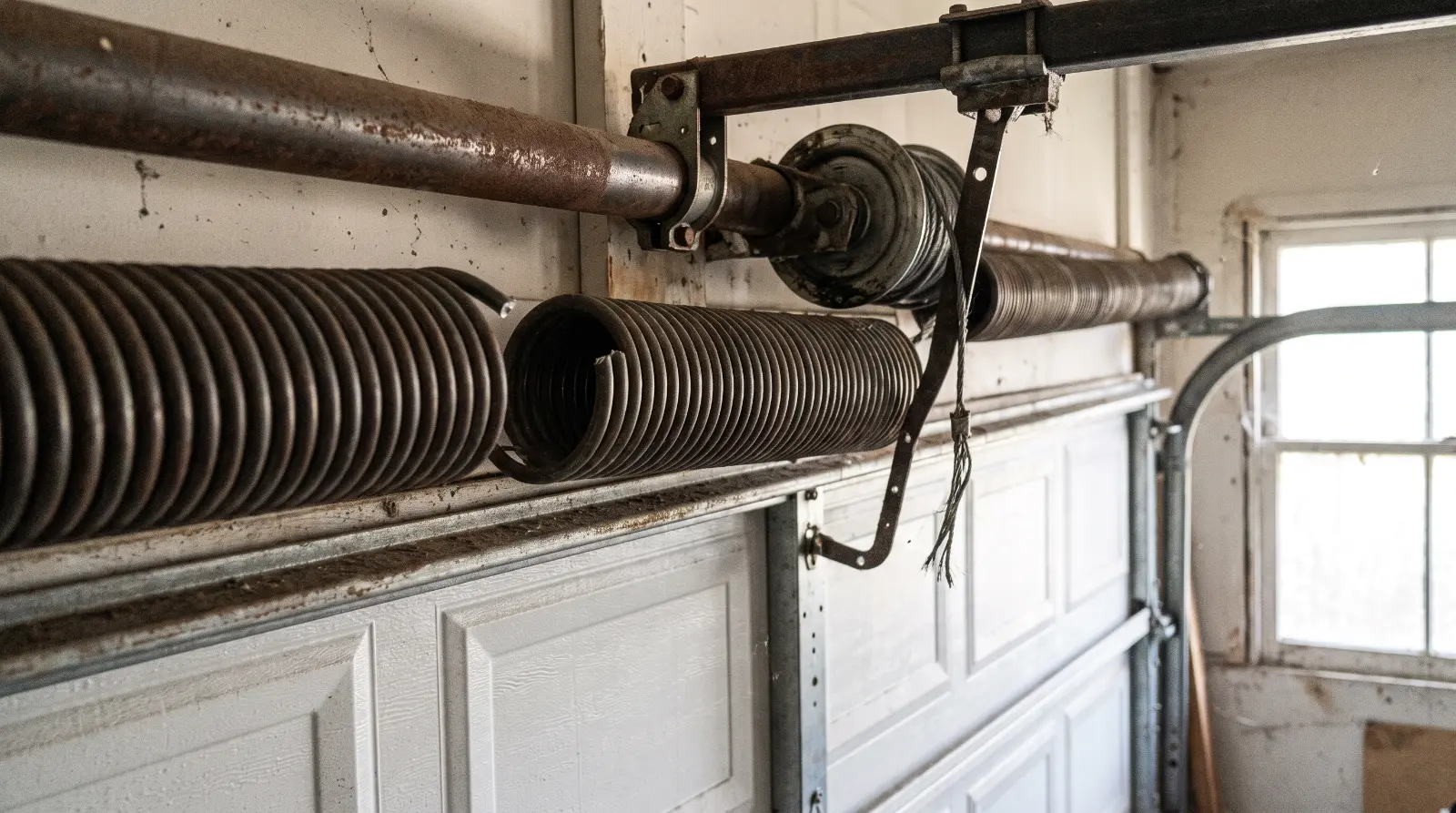
If you heard a sound like a gunshot from the garage and now the door feels like it weighs a ton, a spring broke. In the Waterbury customer reviews we looked at for local garage door companies, broken springs came up in about 4 of every 10 repairs, often with the cables replaced at the same time. It's the single most common garage door repair, and it happens more often in cold weather. Here's what's going on, what to do right now, and what to expect when you call.
Don't touch the spring. Leave the door closed, unplug the opener so it doesn't keep trying to lift the door, and keep kids and pets away from it. Springs hold enormous tension even after one side breaks.
Spring just broke? Do this now
- Leave the door where it is. If it's closed, keep it closed. If it's open, don't try to lower it by hand. Keep people and cars out from under it.
- Unplug the opener or switch off the breaker, so nobody presses the button and burns out the motor or snaps a cable.
- Don't pull the red release cord with the door open. Without a working spring the door can drop all at once.
- Take a quick look from a safe distance. A gap in the coil above the door, a loose cable or a door hanging crooked are all worth mentioning on the phone.
- Call a garage door company and say whether a car is stuck inside.
Torsion springs vs. extension springs
Most garage doors in the Waterbury area use one of two systems.
Torsion springs sit on a steel shaft right above the door. When the door closes, the spring winds up and stores energy, then unwinds to help lift the door. Most doors installed in the last few decades use torsion springs. A broken one is easy to spot: you'll see a gap of an inch or two in the coil.
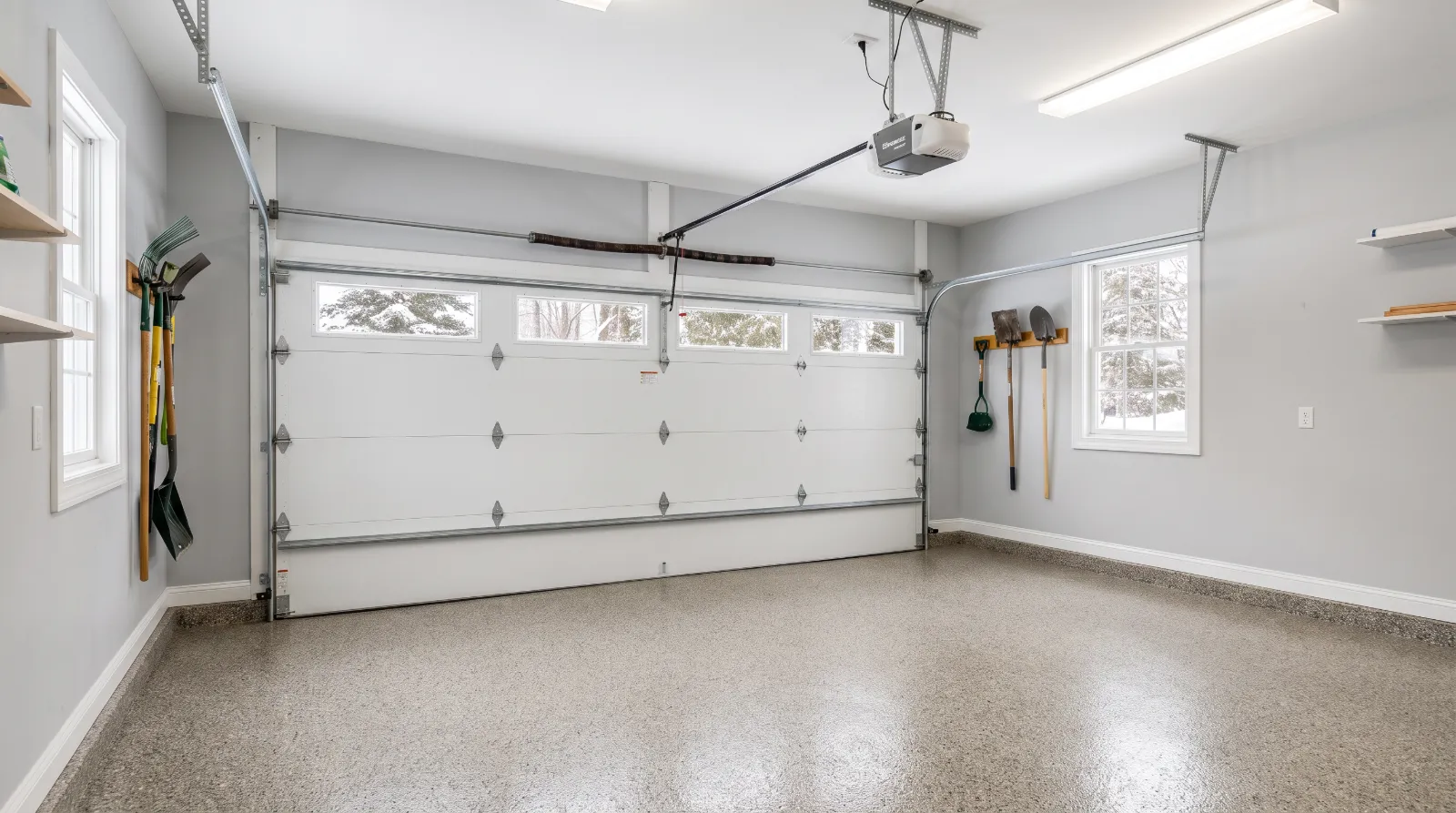
Extension springs run along the horizontal tracks on each side of the door and stretch as the door closes. You'll still find them in a lot of older Waterbury garages, especially detached single-car garages behind homes built before the 1950s. When an extension spring breaks, it can fly across the garage unless a safety cable runs through it. If yours don't have safety cables, ask the technician to add them, or ask about converting to torsion.
Why springs break in Waterbury winters
Every spring has a rated life, usually around 10,000 cycles for a standard spring. Wear builds up slowly, and the final failure often comes on a cold morning. Waterbury's average January low is about 20°F, and cold steel is less forgiving than warm steel. Add rust from road salt (see our winter care tips) and a door that's heavier from packed snow, and a worn spring is more likely to give out between December and March.
Signs a spring is near the end:
- The door feels heavy when you lift it by hand with the opener disconnected.
- It doesn't stay put halfway up and drifts down or shoots up.
- The opener strains or the door lifts unevenly.
- You can see rust, or gaps between coils that should be touching.
What the repair involves
A technician will measure the old spring's wire size, length and inside diameter, or weigh the door, so the new spring matches the door. Matching matters. A spring that's too weak or too strong wears out the opener and makes the door unsafe. Most will also check the cables, drums, bearings and rollers, since those often wear at the same time, then balance the door and test the opener's safety reverse.
Ask whether they're installing standard or high-cycle springs. High-cycle springs can last two or three times as long, which makes sense on a door you use many times a day. Most spring jobs take one to three hours on site.
Ask before they start
- Are you replacing one spring or both? If the door has two, both are usually replaced together.
- Are the new springs matched to the weight of my door?
- Standard or high-cycle springs, and roughly how many cycles are they rated for?
- Will you check the cables, drums, bearings and rollers while you're here?
- Will you balance the door and test the opener's safety reverse when you're done?
- What warranty comes with the springs and the work?
- Are you registered with Connecticut as a home improvement contractor, and are you insured?
Common questions
How long do garage door springs last?
Standard springs are commonly rated for about 10,000 open-and-close cycles. At four or five cycles a day, that's roughly six to seven years. High-cycle springs are built for more cycles and can last two or three times as long.
Should both springs be replaced at the same time?
Usually, yes. If your door has two springs, they were installed together and have done the same number of cycles. When one breaks, the other is usually close behind, and replacing both saves a second service call.
Can I replace a garage door spring myself?
We don't recommend it. Torsion springs are wound under enough tension to break bones, and extension springs can snap loose like a whip. This is one of the few home repairs where hiring a trained technician is mostly about safety.
Is it safe to drive with a broken spring if my car is inside?
Don't try to open the door with the opener or by hand. A garage door company can usually release the door safely or replace the spring so you can get the car out.