Cables, rollers and tracks are the parts that keep a garage door moving straight, and after a few Waterbury winters of salt and slush they're often the first parts to wear. When one of them fails, the door usually tells you right away. It hangs crooked, makes a scraping sound, or stops partway with one side lower than the other.
A crooked door is dangerous. The weight of the door is no longer balanced, and it can drop suddenly. Leave it alone, keep everyone clear, and don't run the opener.
Lift cables
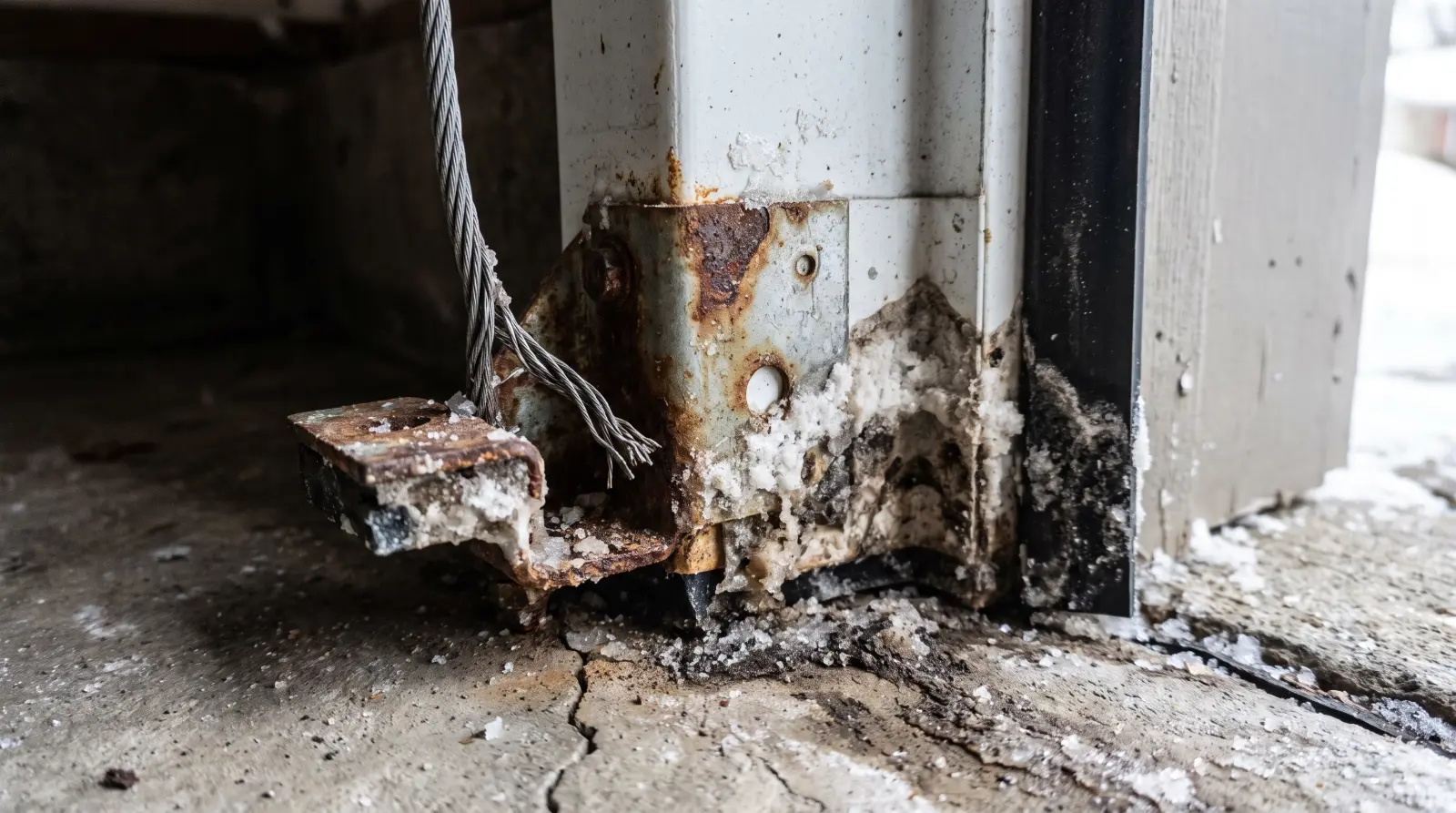
On a torsion system, two steel cables run from the bottom corners of the door up to drums on the spring shaft. If a cable frays, rusts through or slips off its drum, that side of the door loses support. Road salt is hard on the bottom brackets where the cables attach, so in Waterbury it's worth checking that corner of the door for rust every spring.
Rollers
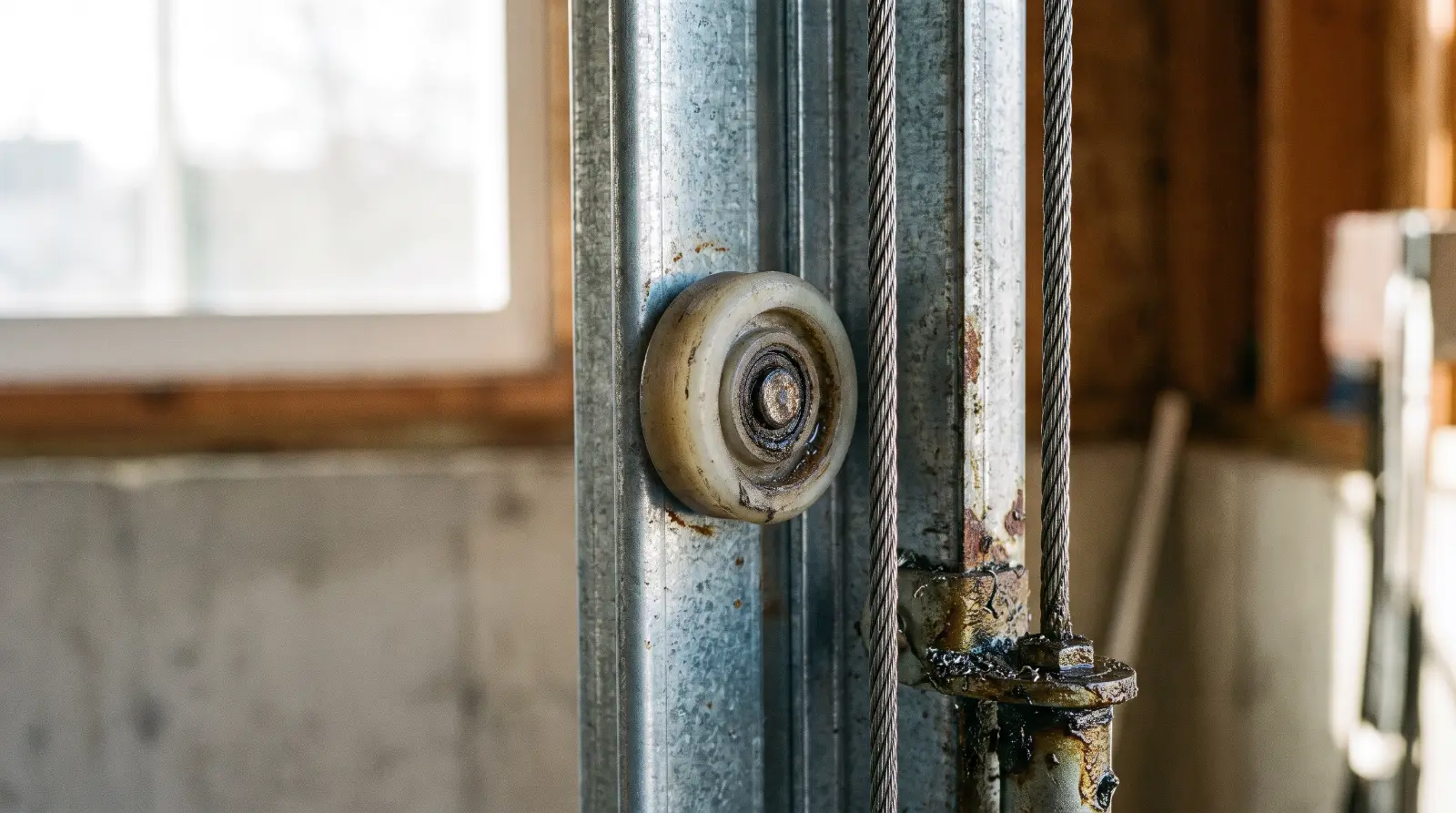
Rollers ride in the tracks on each side of the door. Old steel rollers wear flat spots and get noisy. Nylon rollers with ball bearings run much quieter. If a roller cracks or comes out of its hinge, the door can bind or jump the track.
Tracks
Tracks get bent by cars, bikes and snow blowers more often than you'd think, and in tight single-car garages there isn't much room to miss. A small dent can sometimes be straightened. A badly bent section usually needs replacing. Tracks should be clean and dry. Don't grease them, because grease collects grit and makes rollers skid instead of roll.
Signs something is wrong
- One side of the door is higher than the other.
- A cable looks frayed, loose or is hanging off the drum.
- Scraping, popping or grinding as the door moves.
- A gap between the door and the track, or a roller sitting outside the track.
- The door shakes or wobbles as it travels.
What the repair involves
Because cables connect to the springs, a technician typically releases the spring tension first, then replaces the cable or resets it on the drum, realigns or replaces track sections, swaps out damaged rollers and rebalances the door. Many will recommend replacing both cables together, the same way springs are usually done in pairs.
Door crooked right now?
- Stop using it. Don't press the button again and don't try to push the door back into the track.
- Unplug the opener so nobody runs it by accident.
- Keep everyone clear, especially kids and pets, and don't park under the door.
- Don't touch the cables or the bottom brackets. They're connected to the springs, which are still under tension.
- Call a garage door company and describe which side is lower and whether a cable is hanging loose.
How long the repair usually takes
Putting a cable back on its drum, replacing both cables or swapping a set of rollers is often an hour or two. Replacing a bent track section, or fixing a door that came fully out of the track, can take longer. If the springs are worn too, many technicians will suggest doing them on the same visit, since the tension has to be released anyway.
Ask the technician
- Why did the cable come off or snap? Rust, a worn drum, or a spring problem?
- Should both cables be replaced, not just the broken one?
- Are the bottom brackets rusted from road salt, and do they need replacing?
- Are the rollers worn, and are nylon rollers a better choice for this door?
- Is the track bent, or just loose at the brackets?
- Will you rebalance the door and test the safety reverse when you're done?
Common questions
What does it mean when a garage door is crooked?
Usually one lift cable has slipped off its drum or snapped, so one side of the door is lower than the other. Stop using the door. It can fall without warning.
Can a garage door come off its track?
Yes. A car bumping the door, a broken cable, or a roller that's worn or missing can all push the door out of the track. Running the opener after that usually makes the damage worse.
How often should rollers be replaced?
Standard steel rollers often last around 10 years. Nylon rollers with sealed bearings run quieter and can last longer. Cracked, wobbly or flat-spotted rollers should be replaced.