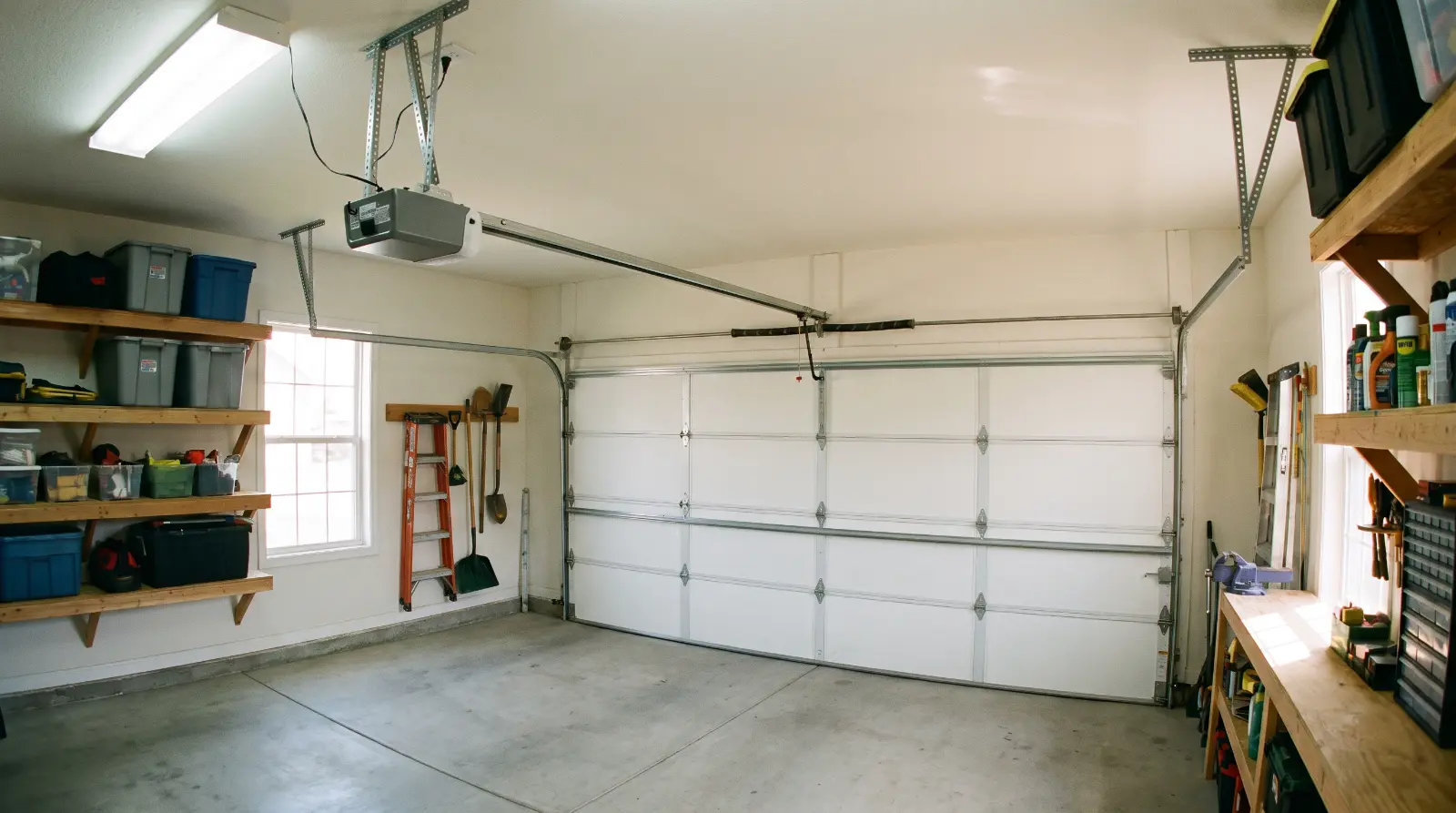
The opener gets all the blame, but it's only one part of the system. The springs do the heavy lifting. The opener just guides the door up and down. That's worth knowing before you replace an opener that's really just struggling against a bad spring.
Common opener problems and what they usually mean
- Remote doesn't work, wall button does. Dead battery, the lock or vacation mode is on at the wall control, or the remote needs reprogramming.
- Motor runs but the door doesn't move. The trolley is disconnected, or the drive gear inside the motor is stripped. Stripped gears are common on older chain-drive units and are usually repairable.
- Door reverses before it closes. Safety sensor alignment, or the close force needs adjusting. See door won't close.
- Opener clicks or hums and the door won't lift. Often a broken spring rather than the opener. Check before you buy a new one.
- Lights flash and nothing happens. Most brands use flash patterns as error codes. The pattern is listed in the manual or on the inside of the light cover.
- Loud grinding or rattling. Loose chain, worn sprocket, or a door that's out of balance.
Is your opener 20 or 30 years old?
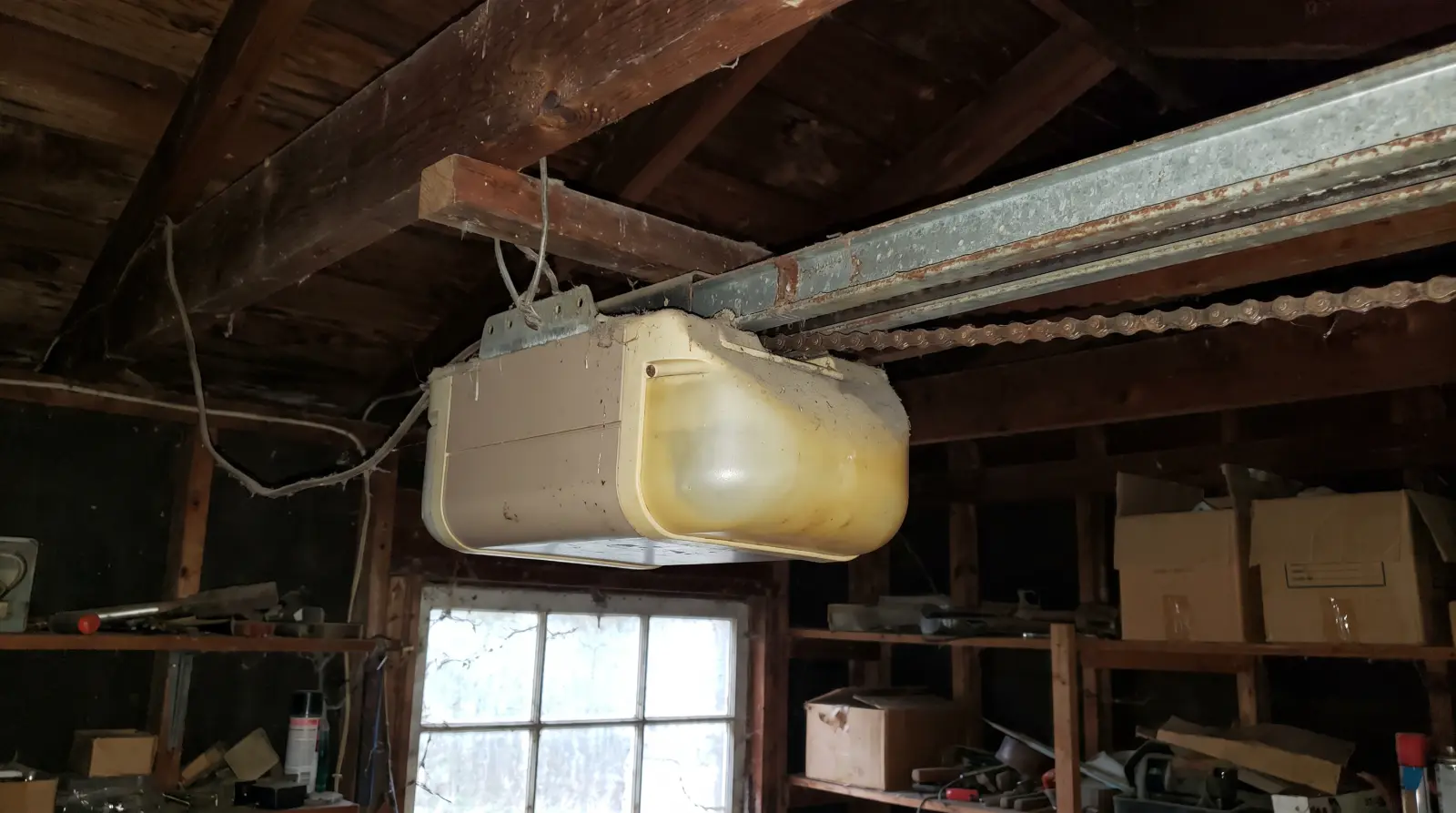
Plenty of Waterbury garages still run openers from the 1980s and 1990s. They often still work, but there are good reasons to retire one:
- Security. Older openers use fixed codes that can be copied. Openers made since the late 1990s use rolling codes that change every time.
- Safety. Openers made before 1993 may not have the photo-eye sensors that stop the door from closing on a person, pet or car. Federal rules have required that kind of entrapment protection on openers sold since then.
- Parts. Gears, boards and remotes for very old models can be hard to find, so a repair can cost close to what a new unit does.
- Noise and strain. Old chain drives get loud, and a worn motor struggles more in cold weather.
If the door itself is in good shape and well balanced, a new opener on the old door is usually a simple swap.
Repair or replace?
A repair makes sense when the opener is fairly new and the fix is a single part: sensors, a gear kit, a logic board, a remote. A replacement makes more sense when the unit is past about 10 to 15 years old, uses old fixed-code remotes, or needs several parts at once.
A lot of Waterbury homes have attached garages tucked under a bedroom or family room, especially raised ranches and split levels from the 1960s through the 1980s. In those homes a quiet belt-drive or wall-mount opener is often worth the extra cost.
Brands you'll see around here
LiftMaster and Chamberlain (made by the same company), Genie, Craftsman and Linear are the brands most local garage door companies service. Most technicians can work on any of them, but if you need a specific part, have the brand and model number from the label on the motor ready when you call.
Cold-weather opener tips
- Don't keep pressing the button if the door is stuck. Find out why first.
- Keep the door's moving parts lubricated so the opener isn't fighting stiff rollers and hinges.
- If the door is frozen to the floor, free the seal before running the opener.
- Test the safety reverse once a season by placing a roll of paper towels under the door. It should reverse on contact.
What it usually costs
Inch Calculator puts typical opener repairs at about $180 to $360, and This Old House lists opener replacement at about $371 to $450 installed. HomeAdvisor's Waterbury opener page lists the openers themselves at roughly $150 to $250 for chain drive, $160 to $450 for belt drive and $250 to $500 for screw drive, before installation. Wi-Fi models and wall-mount units cost more. See the cost guide for details.
Common questions
Should I repair or replace my garage door opener?
If the opener is under about 10 years old and the problem is a sensor, remote, gear or logic board, repair usually makes sense. If it's older, noisy, lacks rolling-code security or needs a major part, replacement is often the better value.
Belt drive or chain drive?
Chain drives are durable and cheaper but louder. Belt drives are much quieter, which matters if there's a bedroom above or next to the garage. Wall-mount openers save ceiling space and work well in garages with low or cluttered ceilings.
Why does my opener work in summer but struggle in winter?
Cold thickens the grease in the opener and on the door, and the door may be catching on ice. If the door itself is well balanced and lubricated, a healthy opener shouldn't struggle. Strain in winter often points to a weak spring.
Do new openers work with my phone?
Many current openers from LiftMaster, Chamberlain and Genie have Wi-Fi built in or available as an add-on, so you can open, close and check the door from an app.